St Paul's Church, Covent Garden: From Cold and inefficient to even Radiant Comfort
Grade I-listed St Paul's Church in Covent Garden had never been heated effectively. Ultra-Fin®, Ultra-Clip™ and Cross™ manifolds were installed across 300m² by three installers in under five days-without altering the historic building fabric. The church is now extremely comfortable, with dramatically reduced energy consumption.
Bringing Radiant Comfort to Grade I-Listed St Paul’s Church, Covent Garden
How Ultra-Fin transformed a historically difficult-to-heat church without compromising its protected building fabric
Heating a Grade I-listed building presents a challenge that extends far beyond calculating its heat loss.
The system must provide dependable comfort while respecting the historic structure, preserving original materials and avoiding unnecessary alterations. At St Paul’s Church in Covent Garden, these requirements were combined with another major problem: the church had never been heated effectively.
After its original steam boiler was replaced with a conventional hot-water boiler, the existing radiators could no longer keep up with the heating demand. The radiators became hot, but the church remained cold and uncomfortable.
Ultra-Fin® provided a different solution.
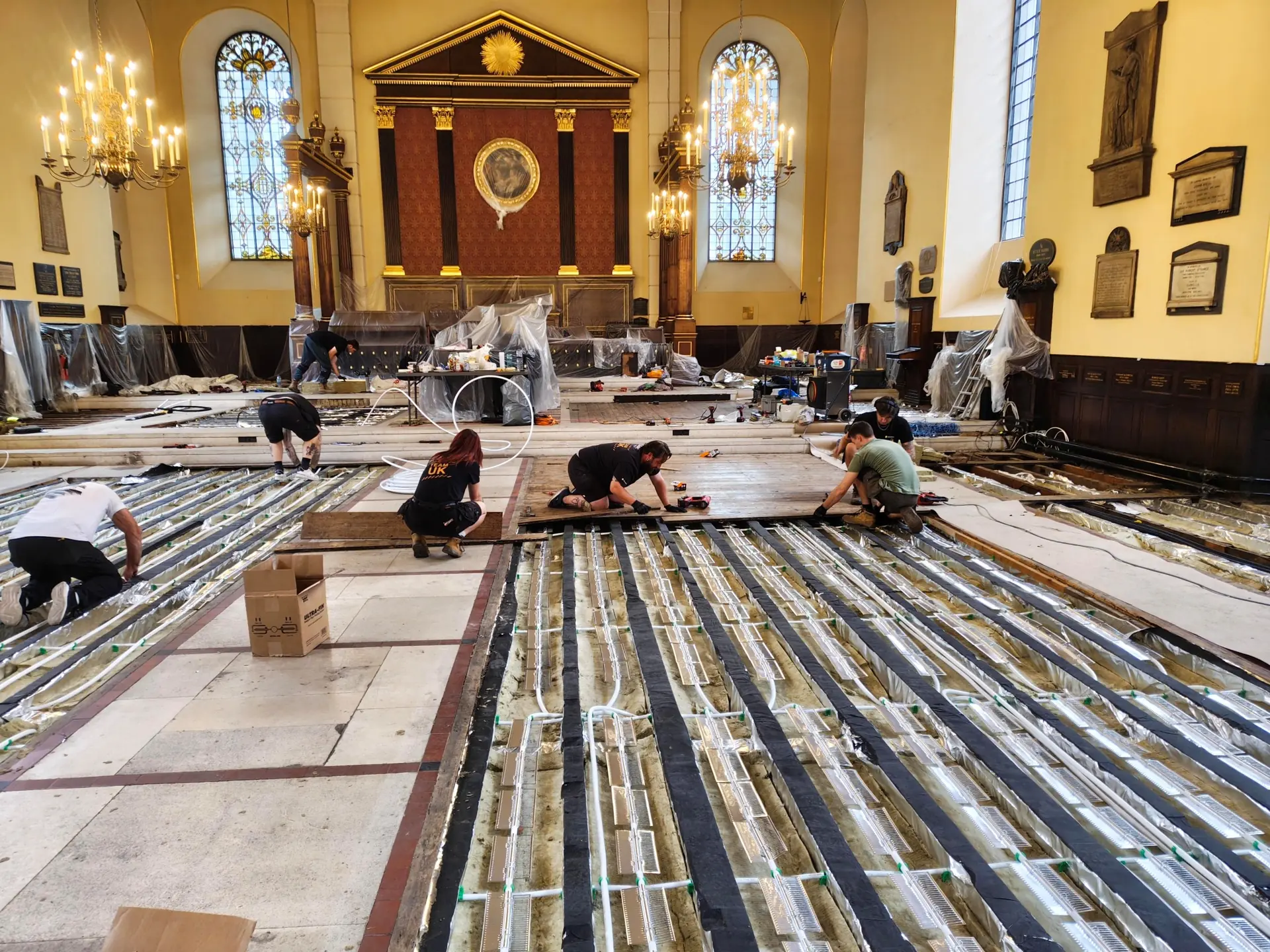
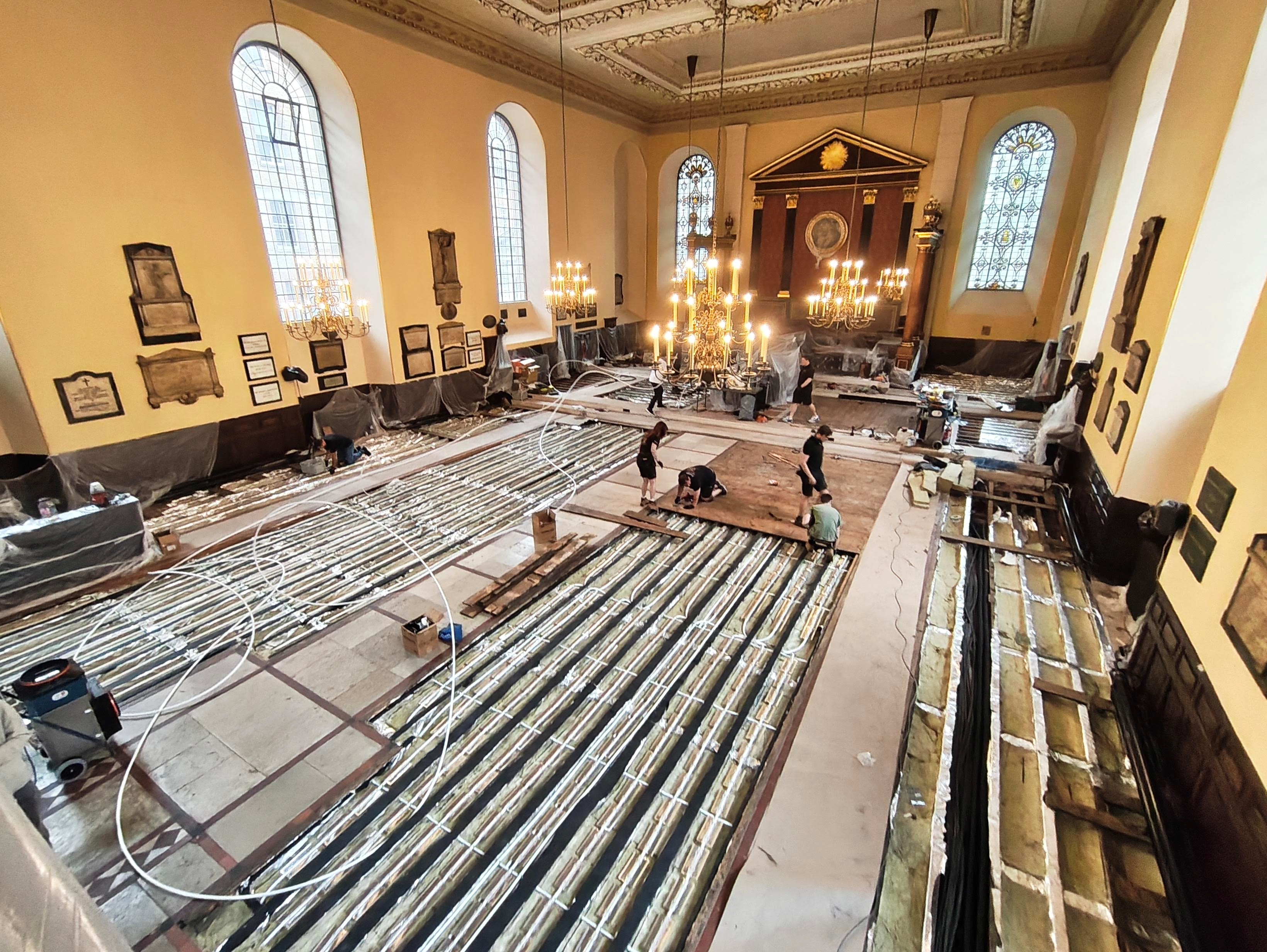
Installed beneath approximately 300 m² of historic flooring, Ultra-Fin turned the floor into a large, gentle radiant heating surface. Ultra-Clip™ supports simplified the installation, while two eight-zone Cross™ manifolds provided centralized control over the different heating areas.
Three installers completed the system in under five days without permanently altering the historic building fabric.
The result is a church that is now exceptionally comfortable, with dramatically reduced energy consumption.
A Church That Had Never Heated Properly
Large historic churches are notoriously difficult to heat.
They commonly contain high ceilings, substantial masonry walls, large windows and an enormous internal volume. Conventional radiators heat the air immediately surrounding them, but much of that warmth rises toward the ceiling before it can provide meaningful comfort within the occupied area.
This was the long-standing problem at St Paul’s Church.
The church’s earlier steam-heating system operated at the higher temperatures traditionally associated with steam. When the steam boiler was replaced with a conventional hot-water boiler, the existing radiators were no longer capable of delivering enough usable heat to maintain comfortable conditions throughout the building.
Operating the boiler for longer periods did not address the fundamental problem. Heat was still being delivered from a limited number of localized emitters into a very large space.
The church required a different approach—one that would deliver warmth directly into the occupied area instead of attempting to heat the entire volume of air above it.
Why Conventional Underfloor Heating Was Not Suitable
Underfloor heating offered an obvious way to improve comfort, but St Paul’s is not a conventional building.
As a Grade I-listed church, its historic floors and surrounding structure form an important part of the protected building fabric. A typical screeded underfloor heating system would have required extensive intervention.
Conventional systems can involve:
Permanently altering original flooring
Adding concrete or gypsum screed
Increasing the finished-floor height
Adding considerable structural weight
Modifying thresholds, steps and surrounding details
Introducing materials that would be difficult to remove
Extending the project while the screed is installed and cured
These changes would have been difficult to justify within a nationally important historic building.
The objective was therefore not simply to install underfloor heating. It was to introduce radiant comfort while protecting the church’s historic character and avoiding unnecessary changes to its original construction.
Why Ultra-Fin Was Chosen
Ultra-Fin works within the existing floor structure.
Instead of embedding tubing in concrete or screed, the tubing and aluminium Ultra-Fin heat emitters are positioned inside the floor cavity. Warm water circulates through the tubing and heats the Ultra-Fin emitters.
The emitters transfer energy into the cavity using radiant heat and natural convection. That warmth then moves evenly through the floor structure, turning the finished floor into a broad radiant surface.
This approach offered several important advantages for St Paul’s:
No concrete or screed was required
No additional finished-floor height was created
No significant structural weight was added
The system could be installed within the existing floor structure
The original building fabric could be preserved
The installation remained accessible and largely reversible
Heat could be distributed throughout the occupied area
The system could operate from the church’s conventional hot-water boiler
Ultra-Fin allowed the project team to improve the building’s heating performance without forcing the historic church to accommodate a modern concrete floor system.
Working With the Historic Building Fabric
Work within a listed building requires restraint.
The purpose is not simply to conceal modern technology. It must be introduced in a way that respects the existing structure and minimizes permanent intervention.
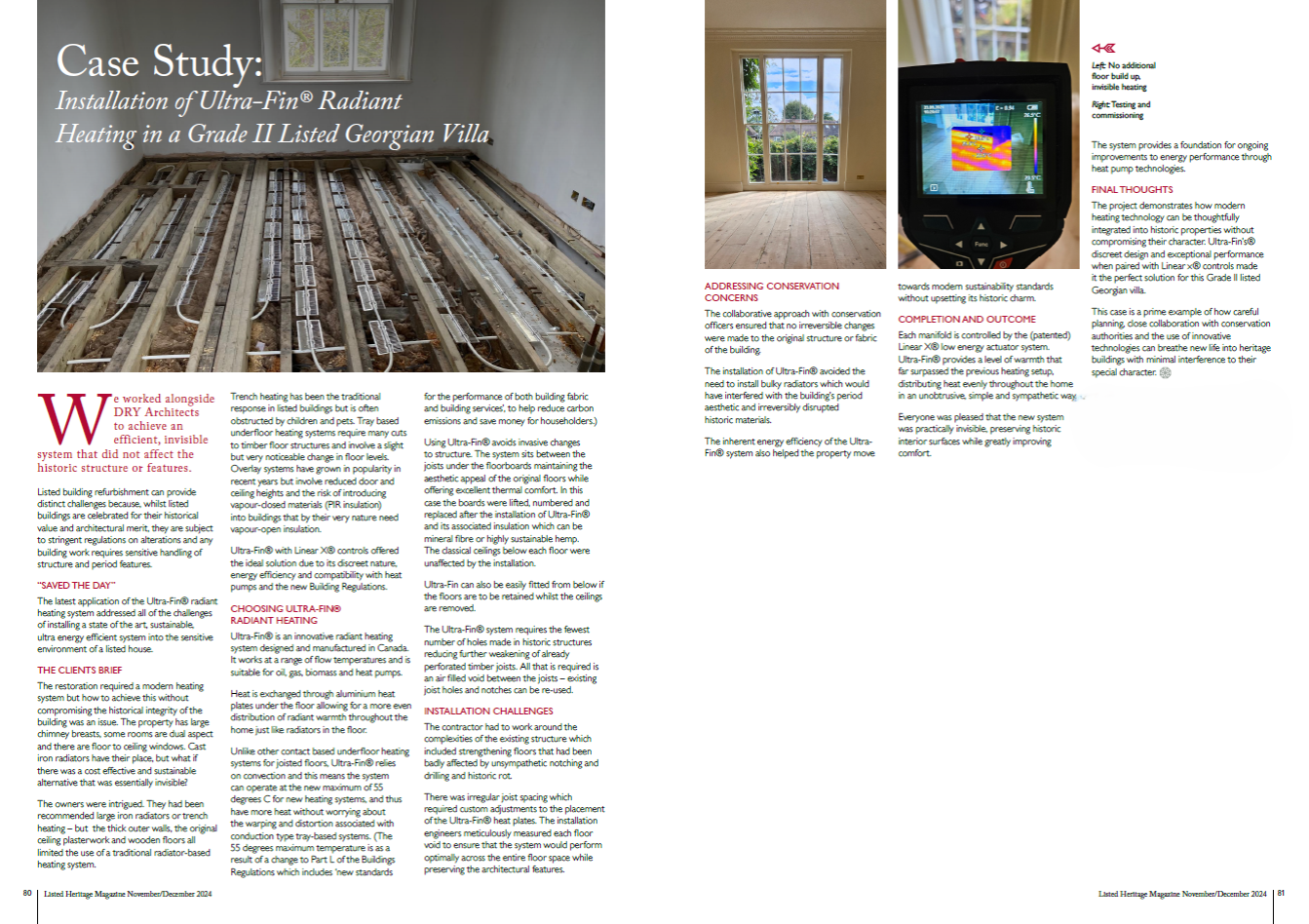
At St Paul’s, the floor was carefully accessed so the heating system could be installed within the existing floor void. Ultra-Fin and the associated tubing were positioned beneath the finished floor, after which the original flooring was reinstated.
There was no need to cover the historic structure with a concrete overpour or construct a new heated floor above it. Door levels, steps, thresholds and surrounding architectural details remained unchanged.
Once the flooring was returned to its original position, the heating installation effectively disappeared.
The church retained its historic appearance, but the floor could now provide gentle, evenly distributed radiant warmth.
Ultra-Clip Simplified the Installation
Ultra-Clip™ supports were used to position and secure the tubing within the floor structure.
The Ultra-Clip system accommodates different installation methods without requiring complicated mounting assemblies. It provides a straightforward way to support the tubing and Ultra-Fin heat emitters while maintaining the placement required by the heating design.
This flexibility was particularly valuable within the irregular conditions commonly encountered in an historic building.
Rather than forcing the structure into a standardized modern layout, the installation could be adapted to the building as it was found. The system worked around the existing framing and site conditions.
This helped three installers complete approximately 300 m² of Ultra-Fin radiant heating in under five days.
For a project of this size, carried out within a protected historic interior, the simplicity and speed of installation were significant advantages.
Turning the Floor Into the Radiator
The most important difference between the old radiator system and Ultra-Fin is where the heat is delivered.
The original radiators concentrated heat at a small number of points around the church. The warmed air then rose into the large volume above the occupied space.
Ultra-Fin distributes heat across the floor.
Instead of depending on several high-temperature emitters, the system uses approximately 300 m² of floor area as one large, gentle radiant surface. This delivers warmth where it is most valuable: at the level occupied by visitors, worshippers, staff and performers.
Radiant heat warms people and surrounding surfaces directly, helping the building feel comfortable without first attempting to heat the entire volume of air from floor to ceiling.
For a church with substantial ceiling height, this change in heat-delivery strategy was fundamental.
Two Cross Manifolds Provide Area Control
A building of this size cannot be treated as one uncontrolled heating zone.
Different sections of the church are used at different times and may experience different heating requirements. Services, rehearsals, performances, private events and daily activities do not always occupy the same areas.
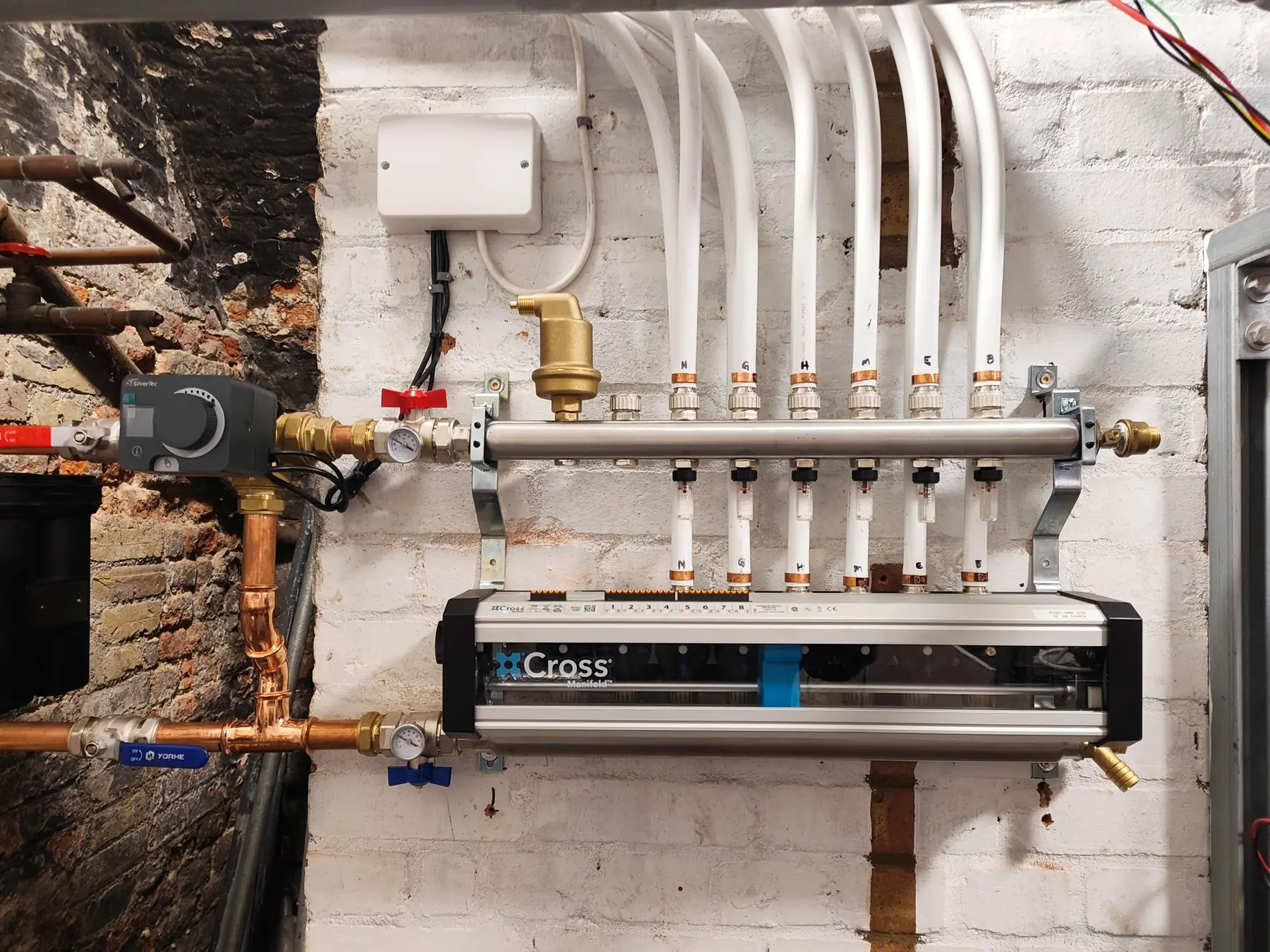
To manage these changing requirements, the installation uses two eight-zone Cross™ manifolds.
Together, the manifolds control the flow through the Ultra-Fin circuits serving the different areas of the church. When an area calls for heat, the Cross system operates the corresponding zone and directs heated water through the required circuits.
This allows the heating system to respond to how the church is actually being used.
The Cross manifolds provide:
Centralized control of the radiant heating circuits
Separate control for different areas
Heat delivery based on individual zone demand
Reduced dependence on multiple conventional thermal actuators
Quiet and controlled valve operation
A clean, organized manifold installation
Straightforward access for future servicing
The ability to control individual areas is an important part of achieving comfort efficiently. Heat can be directed where it is required instead of operating every circuit whenever only one portion of the building is occupied.
How the Complete System Works
The St Paul’s heating system follows a straightforward operating sequence:
1. The conventional boiler heats the water The church’s boiler supplies warm water to the two Cross manifolds.
2. The controls identify which areas require heat Each controlled section responds according to its individual heating demand.
3. Cross operates the required zones The manifolds direct water through the Ultra-Fin circuits serving those areas.
4. Ultra-Fin heats the floor cavities Warm water passes through the tubing and aluminium Ultra-Fin heat emitters installed within the existing floor structure.
5. The floor becomes the radiant surface Heat moves gently through the floor, warming the occupied area evenly and comfortably.
This combination brings together the existing heat source, modern zoning and a radiant delivery system particularly suited to the building.
Exceptional Comfort Where Radiators Fell Short
Before Ultra-Fin, the church’s radiators could not keep pace with the demands of the building.
The transition from steam heating to a conventional boiler left the existing emitters unable to provide adequate comfort. Energy was being consumed, but the heat was not being delivered effectively into the occupied space.
Ultra-Fin changed how that heat entered the church.
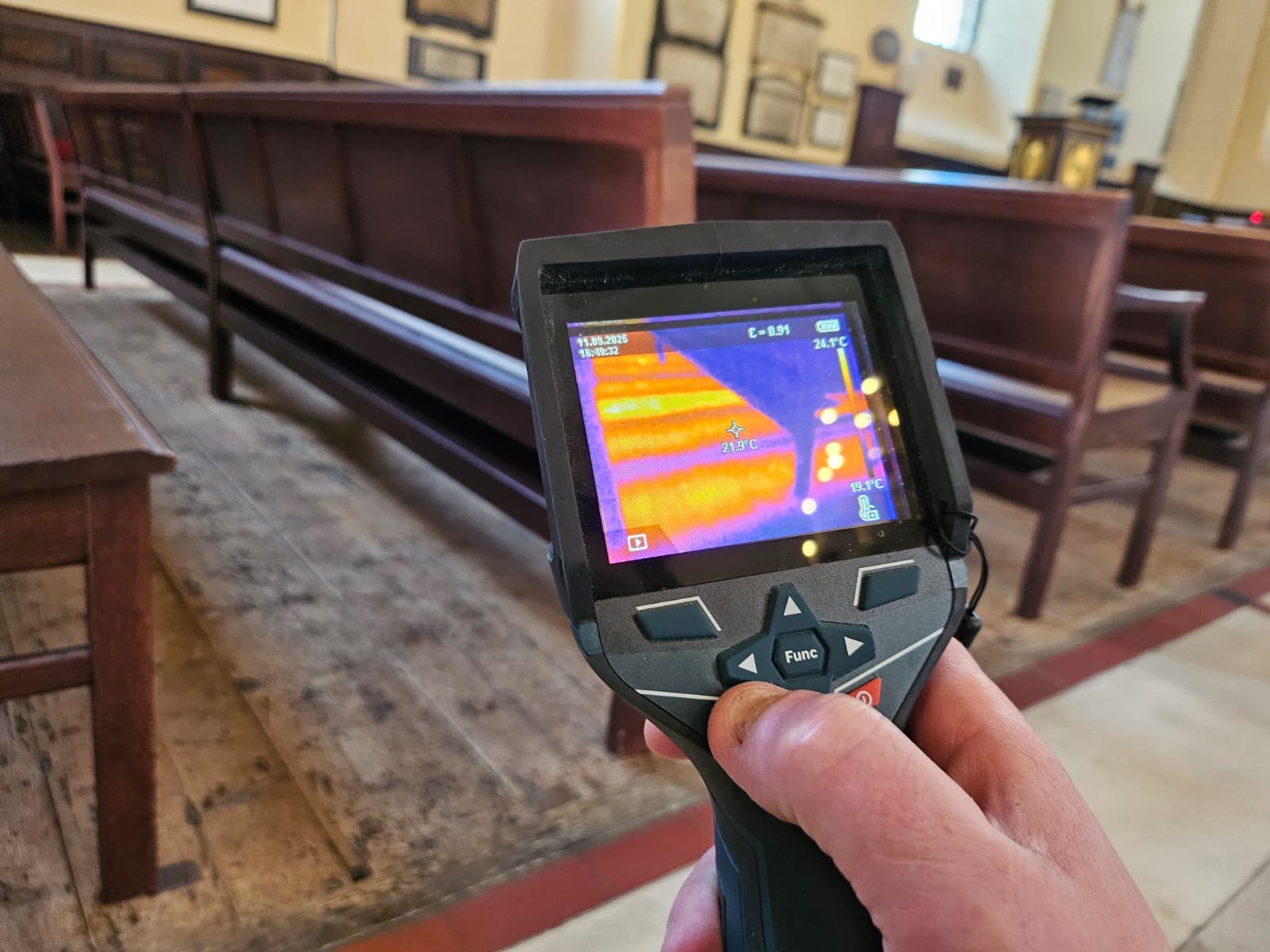
By distributing warmth through the floor, the system created a large radiant surface directly beneath the occupied area. Instead of hot radiators attempting to warm an enormous volume of air, the church now benefits from gentle and even heat across the floor.
The improvement has been substantial.
St Paul’s Church is now exceptionally comfortable, and its energy consumption has been dramatically reduced.
The change did not come simply from installing another heat source. It came from using the available heat more effectively and controlling its delivery to the areas where it was required.
Featured in The Times
The significance of the project attracted national attention and was featured in The Times on 23 August 2025.
The article highlighted the church’s long-standing heating difficulties and the installation of a new underfloor heating system designed to improve comfort while substantially reducing energy consumption.
Coverage by one of the UK’s leading national newspapers demonstrated the wider importance of the project. St Paul’s is not simply an example of improving comfort in one historic church—it shows how carefully selected modern heating technology can help listed buildings reduce energy use while protecting their architectural character.
Today, the church that had never heated effectively is exceptionally comfortable, with its Ultra-Fin system operating discreetly beneath the historic floor.
A Practical Solution for Listed Buildings
Historic and listed buildings are sometimes assumed to be unsuitable for modern radiant heating. In reality, the difficulty often lies with the installation method rather than radiant heating itself.
Systems requiring thick floor build-ups, concrete overpours or significant structural modifications can be inappropriate for protected buildings. Ultra-Fin avoids those requirements by working within the existing floor construction.
This makes the system particularly suitable for:
Listed churches
Heritage homes
Historic public buildings
Museums and galleries
Period renovations
Buildings with original timber floors
Projects where floor height cannot be increased
Structures unable to accept substantial additional weight
Ultra-Fin can be installed from above when floors are temporarily lifted or from below when the underside of the floor structure is accessible. The installation method can be selected around the building rather than requiring the building to be altered around the heating system.
Simple, Fast and Respectful of the Building
The St Paul’s project demonstrates that a major improvement in comfort does not always require major alteration.
Across approximately 300 m², three installers completed the Ultra-Fin installation in under five days. The system was fitted within the existing floor construction, allowing the historic building fabric to be preserved.
No concrete was poured. No unnecessary floor build-up was introduced. No substantial structural load was added. Once the flooring was reinstated, the church retained its historic appearance.
Beneath the floor, however, the building had gained a modern, fully zoned radiant heating system.
Preserving the Past While Improving Its Future
The purpose of upgrading a listed building is not to make it look new. It is to improve how the building performs while protecting what makes it historically significant.
At St Paul’s Church, Ultra-Fin, Ultra-Clip and Cross manifolds achieved that balance.
Ultra-Fin transformed the existing floor into a radiant heating surface. Ultra-Clip simplified the installation within the historic structure. Two eight-zone Cross manifolds provided control over the different areas of the church.
Together, the systems delivered:
Exceptional comfort
More effective heat distribution
Individual area control
Dramatically reduced energy consumption
A rapid installation
No added floor height
No concrete or screed
No significant additional structural weight
No permanent alteration to the historic building fabric
The church that had never heated effectively is now warm, comfortable and far better equipped for continued use.
Radiant Heating Without Compromising History
St Paul’s Church demonstrates what is possible when modern heating technology is designed to work with an historic building rather than against it.
The project did not require the church to sacrifice its original floors, architectural character or protected fabric. Ultra-Fin used the space already available within the floor to deliver heat more effectively.
For owners, architects and consultants working with listed properties, the project offers a clear lesson:
Improving comfort and reducing energy consumption does not have to mean compromising the building.
With a flexible in-joist heating system, simple tubing supports and carefully controlled distribution, even a Grade I-listed church can receive modern radiant comfort while preserving the history above it.